How Will We Combat Pharmaceutical Pollution?
The international seminar of the APRIORA project has recently concluded, bringing together experts from environmental protection, water management, and the pharmaceutical sector. The aim of the event was to find practical solutions to one of today’s most serious environmental challenges – the release of pharmaceutical substances and other micropollutants into the waters of the Baltic Sea region.
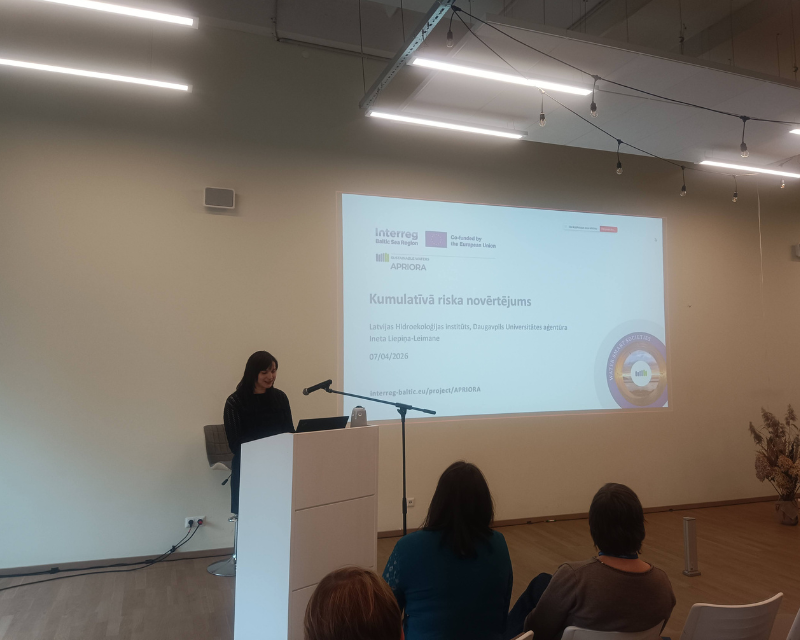
As a partner of the APRIORA project, the Latvian Institute of Aquatic Ecology (LHEI) actively participated in the seminar. Presentations were delivered by LHEI researchers Ieva Putna Nīmane and Ineta Liepiņa-Leimane.
The new Urban Wastewater Treatment Directive (2024/3019) introduces significantly stricter requirements for micropollutant removal. In Latvia, this means that major cities, including Riga, as well as other wastewater treatment plants serving more than 10,000 population equivalents where pollution risk has been identified, will gradually have to implement fourth-stage wastewater treatment. Experts estimate that the total investments required in Latvia could reach approximately 2 billion euros. This represents both a major financial and technological challenge, as existing biological treatment plants are not designed to effectively remove pharmaceutical substances.
The seminar highlighted that substances such as diclofenac and venlafaxine frequently exceed safe concentration levels in rivers and other water bodies. Conventional wastewater treatment methods largely fail to retain these substances, allowing them to enter the environment and accumulate in the Baltic Sea.
Within the project, an innovative GIS modelling tool has been developed, which enables the prediction of pharmaceutical pollution spread and helps plan the most effective mitigation measures. Additionally, a new Cumulative Chemical Risk Index (CCRI) was presented, which assesses not the impact of individual substances, but the combined “cocktail effect” of all pollutants on ecosystems and human health.
To help cover the high costs of fourth-stage treatment, the introduction of Extended Producer Responsibility is planned, involving pharmaceutical and cosmetics manufacturers in financing the necessary upgrades.
In May 2026, the user manual for the GIS modelling tool will be published, followed shortly by practical training sessions for water utility operators and supervisory authorities. These activities will help prepare for the new requirements of the Directive and ensure its effective implementation in practice.
The APRIORA project demonstrates that science-based innovation and international cooperation make it possible to address complex environmental problems and move towards a cleaner Baltic Sea.