
LHEI in Ziemupe Invited Visitors to Discover the Sea as the Beginning of Life
On 22 August, researchers from the Latvian Institute of Aquatic Ecology (LHEI) visited Ziemupe on Latvia’s Baltic Sea coast, where they took part in the educational programme of the “ma-DARA” event. Visitors were invited to learn more about the sea, the diversity of aquatic organisms, the origins of life in water, and the impacts of human-made pollution on aquatic ecosystems.
This year, “ma-DARA” was held in Ziemupe for the 15th time, with “Cradle” as its anniversary theme. The LHEI team interpreted the theme through the sea as one of the most important cradles of life – an environment where the earliest forms of life on our planet originated.
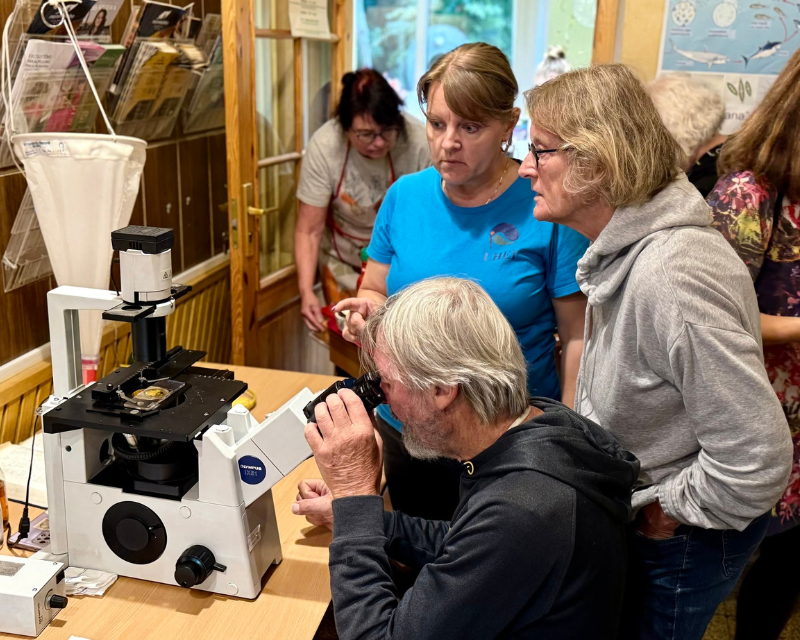
At the LHEI activity area, visitors could take a closer look at organisms found in Latvian waters – both species visible to the naked eye and microscopic organisms requiring magnification. In conversations with researchers, participants learned how different organisms are interconnected within aquatic ecosystems and how scientists study them to better understand the ecological status of marine and freshwater environments.
Another important topic was pollution and its impact on aquatic ecosystems. Using practical and tangible examples, the LHEI team explained how pollutants generated by human activities can enter the aquatic environment, what effects they may have, and how scientific research contributes to developing solutions for reducing pollution.
The event in Ziemupe also provided an opportunity to engage directly with coastal communities and visitors and to discuss which issues related to the Baltic Sea matter most to people today. Such conversations allow researchers not only to share scientific knowledge but also to better understand public interests, questions and concerns related to the marine environment.
“ma-DARA” brings together culture, nature, traditional knowledge, creative activities and environmental learning on the Ziemupe coast. LHEI’s participation continues the Institute’s efforts to make science accessible beyond laboratories and research vessels – creating opportunities for people to meet researchers and discuss the Baltic Sea directly in the places where coastal communities live, spend time and care about the future of the marine environment.


