LHEI Invited Visitors to Explore the Baltic Sea Up Close at the Liepāja Sea Festival
On 11 July, a team of researchers from the Latvian Institute of Aquatic Ecology (LHEI) took part in the Liepāja Sea Festival, setting up the “Sea Winds Laboratory” on Liepāja beach. Visitors had the opportunity not only to learn more about the ecology of the Baltic Sea, but also to take part in marine research themselves – exploring coastal organisms, research methods, microplastic pollution, and geological structures found on the seabed.
This year, the Liepāja Sea Festival took place on 10 and 11 July, with the main programme on 11 July filling Liepāja’s Seaside Park and beach with concerts, workshops, art and circus performances, as well as activities dedicated to exploring and understanding the sea. One of the festival’s educational stops was LHEI’s “Sea Winds Laboratory”.
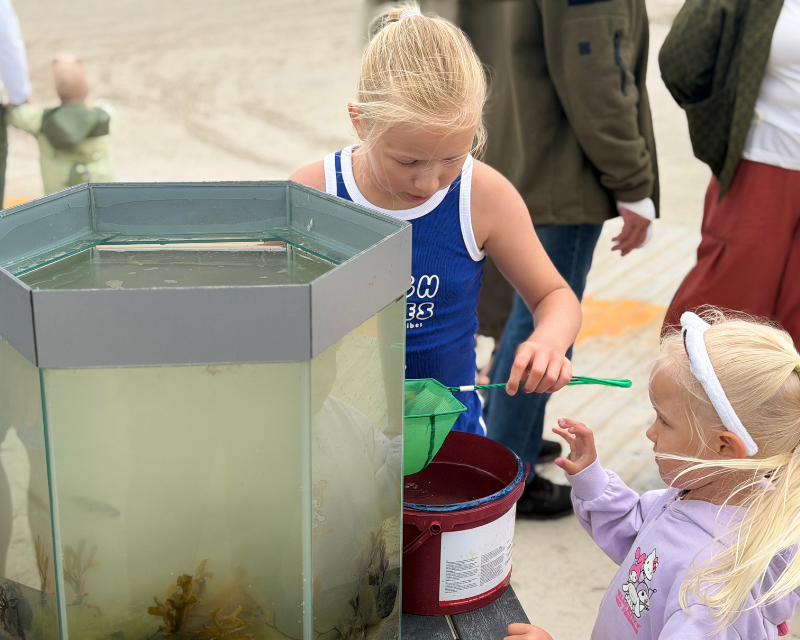
One of the most popular activities was pulling a small shore seine net, carried out together with LHEI researchers three times during the day – at 12:30, 13:30 and 14:30. The activity offered visitors a hands-on opportunity to discover just how diverse marine life can be even very close to the shoreline.
The collected material was examined directly on the beach. Visitors could search among macroalgae for amphipods, shrimps and other marine organisms, while some specimens were placed in specially prepared coastal aquariums. Smaller organisms could also be examined under a microscope.
In this way, festival visitors could experience a small-scale research cycle themselves – from collecting samples in the natural environment to examining them and identifying species together with scientists.
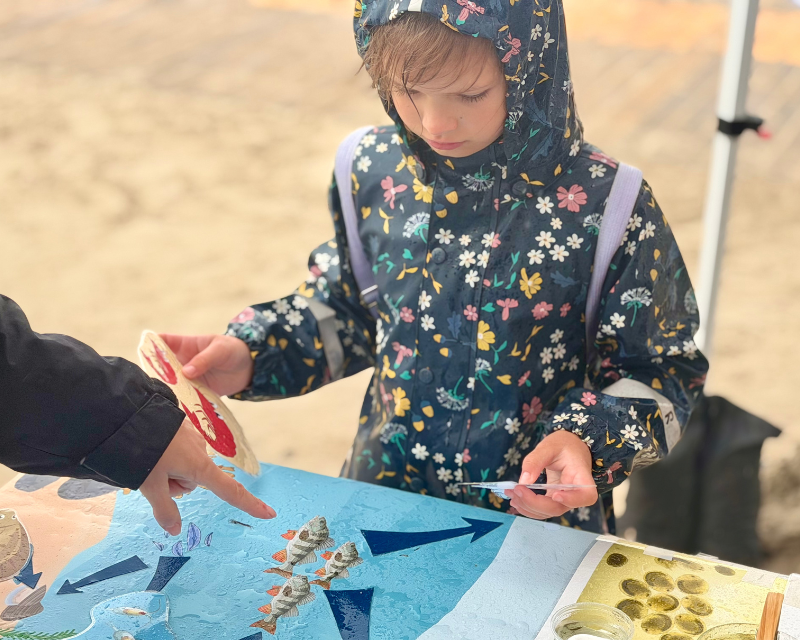
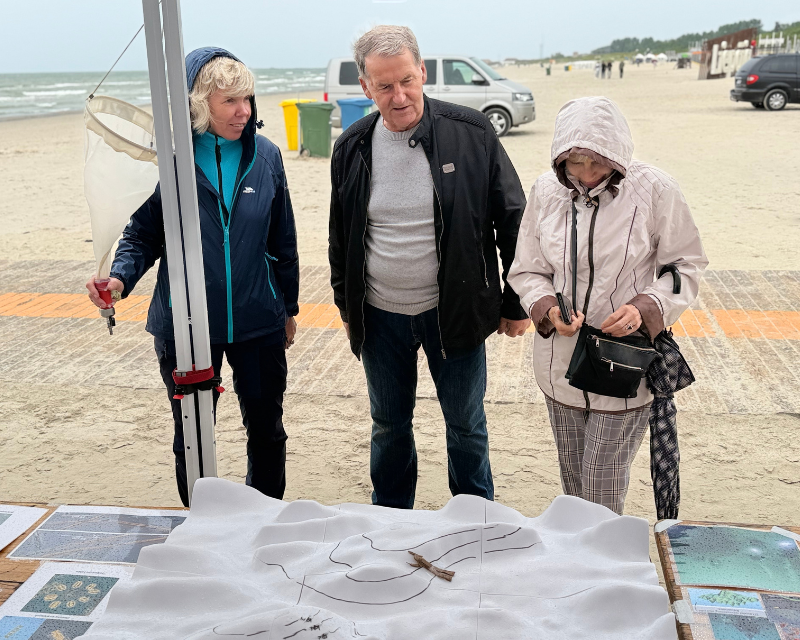
At the “Sea Winds Laboratory”, visitors could also discover the parts of the Baltic Sea that cannot normally be seen from the shore. LHEI researchers demonstrated equipment and instruments used in scientific diving, explained how underwater samples are collected, and introduced methods used to study seabed habitats and assess the quality of the marine environment.
Special attention was also given to plastic and microplastic pollution – what happens to plastic once it enters the aquatic environment, and how researchers collect and analyse samples to detect the presence of microplastics along the coast. Visitors could also learn about geological structures found on the Baltic Sea seabed. Using gypsum samples and interactive games, researchers explained how this mineral resource, which is also found in Latvia, can be used in agriculture and in solutions that may help reduce the amount of nutrients, particularly phosphorus, entering aquatic ecosystems.
For the LHEI team, participating in the Sea Festival was an opportunity to demonstrate that marine research does not take place only in laboratories or aboard research vessels. Some of the methods scientists use in their everyday work can also be explored in a simple and engaging way on the beach – by collecting samples, examining organisms and discussing the factors that influence the Baltic Sea ecosystem.
The topics and knowledge presented during the activities were linked to several research projects implemented by LHEI, including LIFE REEF, Geosites, CLEAN Beach, GYPREG, as well as the Latvian Council of Science project lzp-2024/1-0524 “Development of an interdisciplinary methodological approach for assessing the ecological quality of sediments in the Gulf of Riga”. Support from LIFE REEF and Geosites was also acknowledged in the Sea Festival programme for the “Sea Winds Laboratory”.
We would like to thank the organisers of the Liepāja Sea Festival and everyone who stopped by the “Sea Winds Laboratory”, helped pull the shore seine, looked through a microscope, asked questions, and joined us in exploring the Baltic Sea up close!