
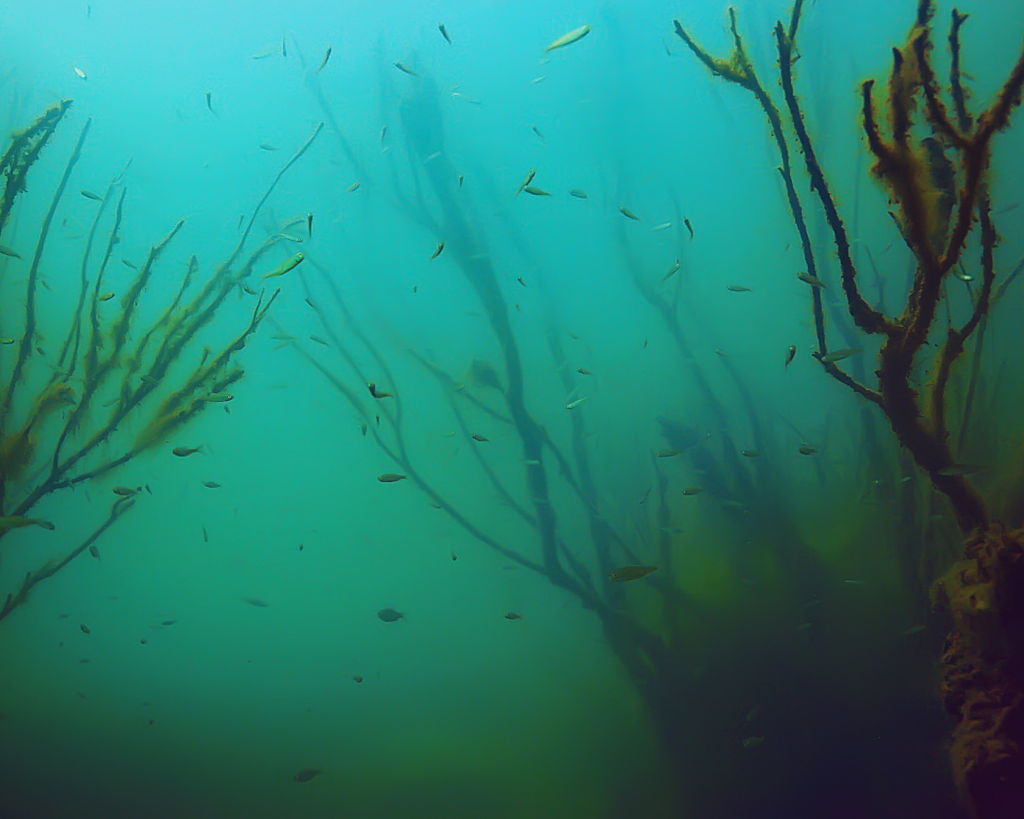
New study highlights long-term changes in Baltic Sea food webs
A new international study examines changes across seven Baltic Sea sub-basins, looking at shifts in the balance between different groups of organisms as well as the impacts of human activities and climate change. The study shows that food web structure has changed substantially over time in all of the Baltic Sea regions analysed.
Researchers from the Latvian Institute of Aquatic Ecology (LHEI), Astra Labuce and Iveta Jurgensone, contributed to the international research team. The study draws on long-term monitoring data covering 26 to 46 years, depending on the sub-basin. This made it possible to compare changes across different parts of the food web – from plankton and seafloor organisms to fish and marine mammals.
The results show that these changes have not occurred in the same way across the Baltic Sea. In many areas, however, they are linked to human pressures, particularly intensive fishing and excessive nutrient inputs, which contribute to eutrophication and oxygen depletion. Climate change adds further pressure by altering water temperature, ice cover and other environmental conditions, in some regions intensifying existing problems. One of the study’s key findings is that marine ecosystems do not necessarily return to their previous state even when human pressures are reduced. For example, lower fishing-related mortality of cod in the Western and Central Baltic Sea has so far not resulted in the recovery of cod populations.
A similar pattern can be seen with nutrient pollution. Since the 1980s, external inputs of phosphorus and nitrogen to the Baltic Sea have been significantly reduced. Nevertheless, oxygen-free areas in the Central Baltic Sea continue to expand, while high concentrations of phosphorus persist in several sub-basins. This shows that long-term human pressures can lead to lasting ecosystem changes that cannot always be reversed by reducing a single pressure alone.
The study concludes that, according to the criteria of the European Union’s Marine Strategy Framework Directive (MSFD), the food webs in the Baltic Sea sub-basins analysed currently do not achieve Good Environmental Status. Improving the condition of the Baltic Sea therefore requires coordinated action to reduce multiple pressures at the same time and an ecosystem-based approach that treats the Baltic Sea as an interconnected system rather than addressing individual problems in isolation.
READ ARTICLE:
Faithfull, C., Taylor, J. M., Puntila-Dodd, R., Ito, M., Scotti, M., Calkiewicz, J., Labuce, A., Margonski, P., Ammar, Y., Müller-Karulis, B., Olin, M., Putnis, I., Jurgensone, I., Silberberger, M., Nordström, M. C., Morkune, R., Tomczak, M. T., Adamowicz, M., Zettler, M., & Bergström, L. (2026). Systemic food web reorganization due to multiple pressures in seven Baltic Sea sub-basins. ICES Journal of Marine Science, 83(6), fsag112.
doi:10.1093/icesjms/fsag112