LHEI researchers study the seabed, marine habitats, and water quality within the ELWIND project
Before major infrastructure is planned at sea, it is essential to understand what lies beneath the surface. In the case of the ELWIND project, researchers from the Latvian Institute of Aquatic Ecology (LHEI) are carrying out this work in the area designated for Latvia’s planned offshore wind farm.
Researchers from the Latvian Institute of Aquatic Ecology (LHEI) are involved in preparing the environmental impact assessment for ELWIND, the joint Latvian–Estonian offshore wind energy project. The Institute’s role is to provide scientific data on the marine environment in the area designated for Latvia’s planned offshore wind farm, with particular focus on seabed habitats, benthic communities, the distribution of suspended particles, and water quality. Such scientific research is essential to ensure that decisions concerning the use of marine space are based on reliable and verifiable data.
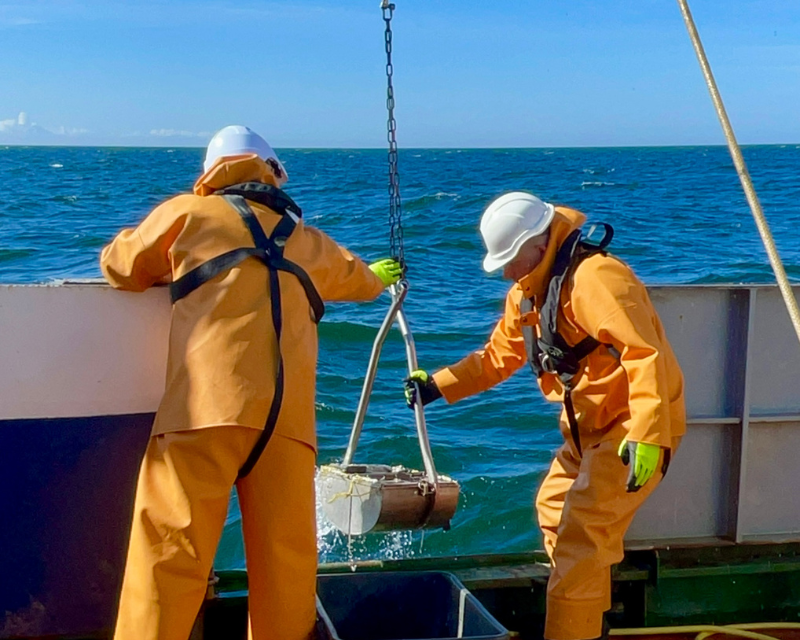
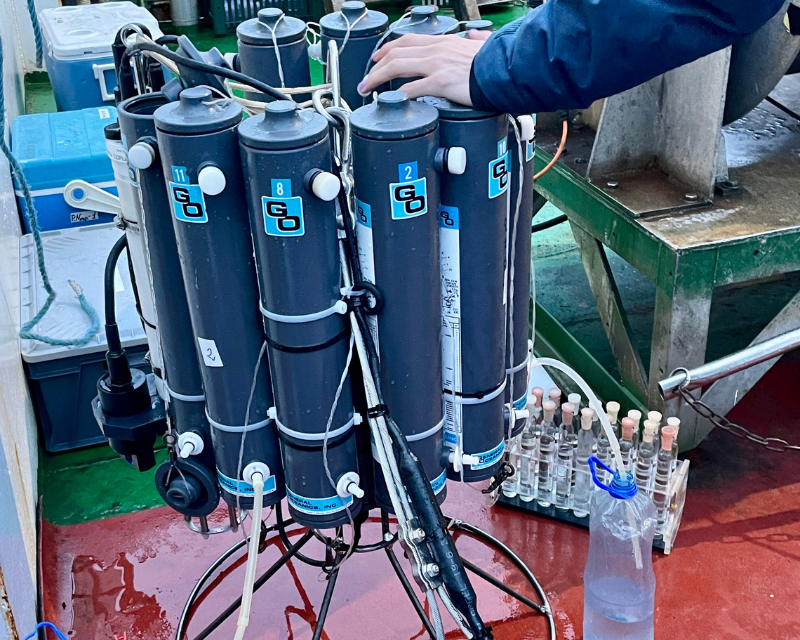
To assess the potential impact of the ELWIND wind energy project on benthic habitats, LHEI carried out fieldwork from 8 to 13 June in the ELWIND study area and along potential cable corridors. Both water and seabed samples were collected, and video footage necessary for the characterisation of benthic habitats was obtained. The research team is currently actively working on processing the collected samples and analysing the acquired material.