
The final post about the Svalbard expedition for the LHEI microplastics research team “New plan and new works” – blog 4
“New plan and new works” – blog 4
Our captain Alicia shows us videos taken from another Polish ship a few days ago in the area. All our white friends are there – a larger bear, most likely a male, is there on the shore, while further a mother bear calls over her two cubs so they all can scurry away. Polar bears do not have tight-knit families – a female bear with cubs will avoid males as there is a high risk that they will attack and simply eat the cubs. Avoiding them by walking is not an issue as polar bears are big walkers. They walk up to 5000 km a year, up to 30 km a day, but on average around 16 km a day.
Busy with their affairs, bears leave us alone over the next days and we see no fresh tracks. We focus on exploring the lagoon. As a result of climate change and glaciers melting, a unique and completely new ecosystem has been created, consisting of two interconnected water environments, different in terms of both physico-chemical and biological parameters. The upper layer of the lagoon is fresh water, while the lower one, from a depth of 8 to 34 meters, is ocean water with a salinity of at least twice higher than that of the Baltic Sea. So far research that begun in 2019 at the University of Klaipeda has focused on lagoon bed research, hydrological parameters, phyto- (plant) and zoo- (animal) plankton surveys, ground fauna studies and collection of environmental DNA samples. Our task is to supplement existing information with knowledge about how modern pollution, i.e., microplastics, move and accumulate in the lagoons when glaciers disappear and new ecosystems are formed in places previously covered by ice.
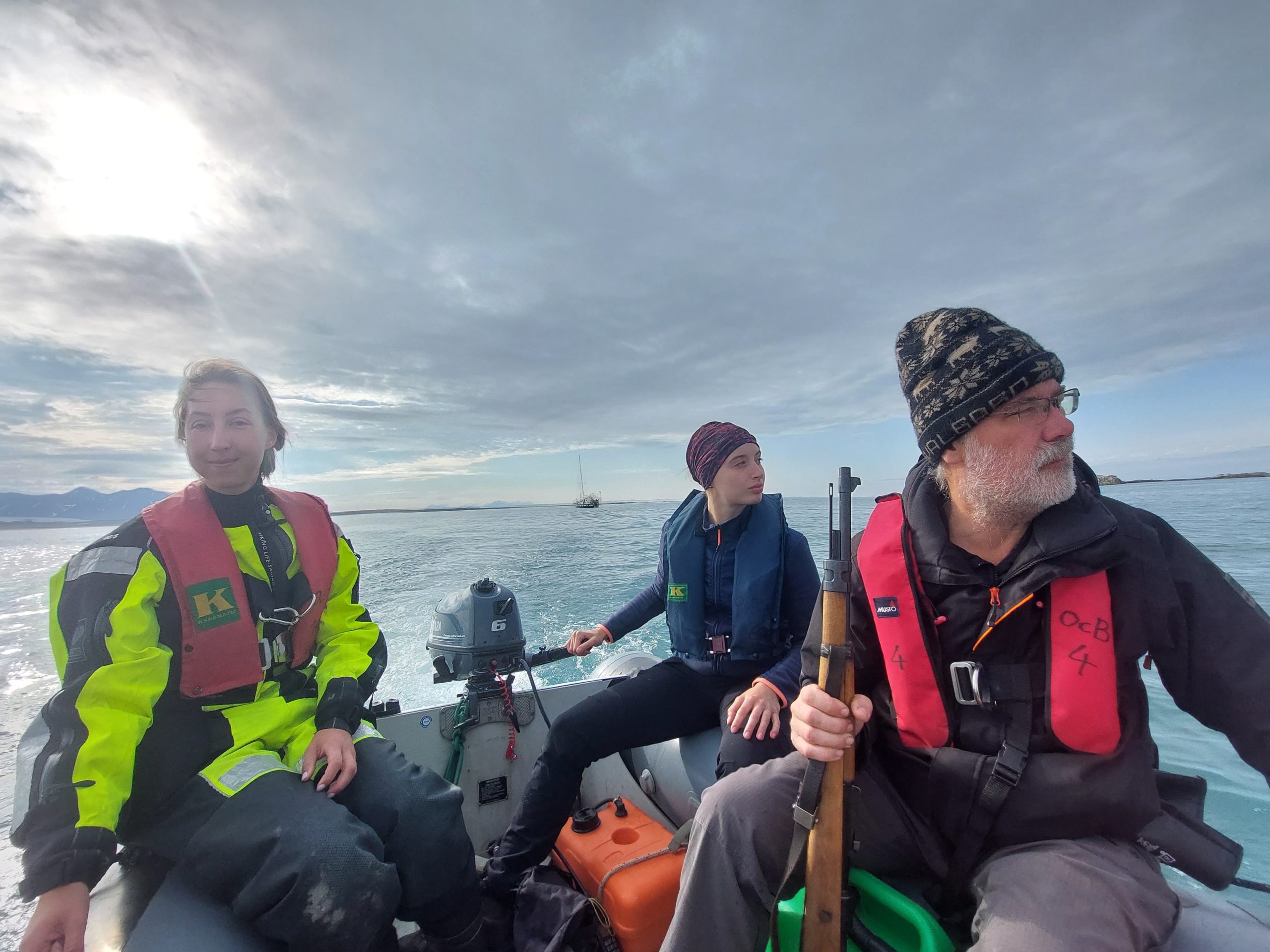
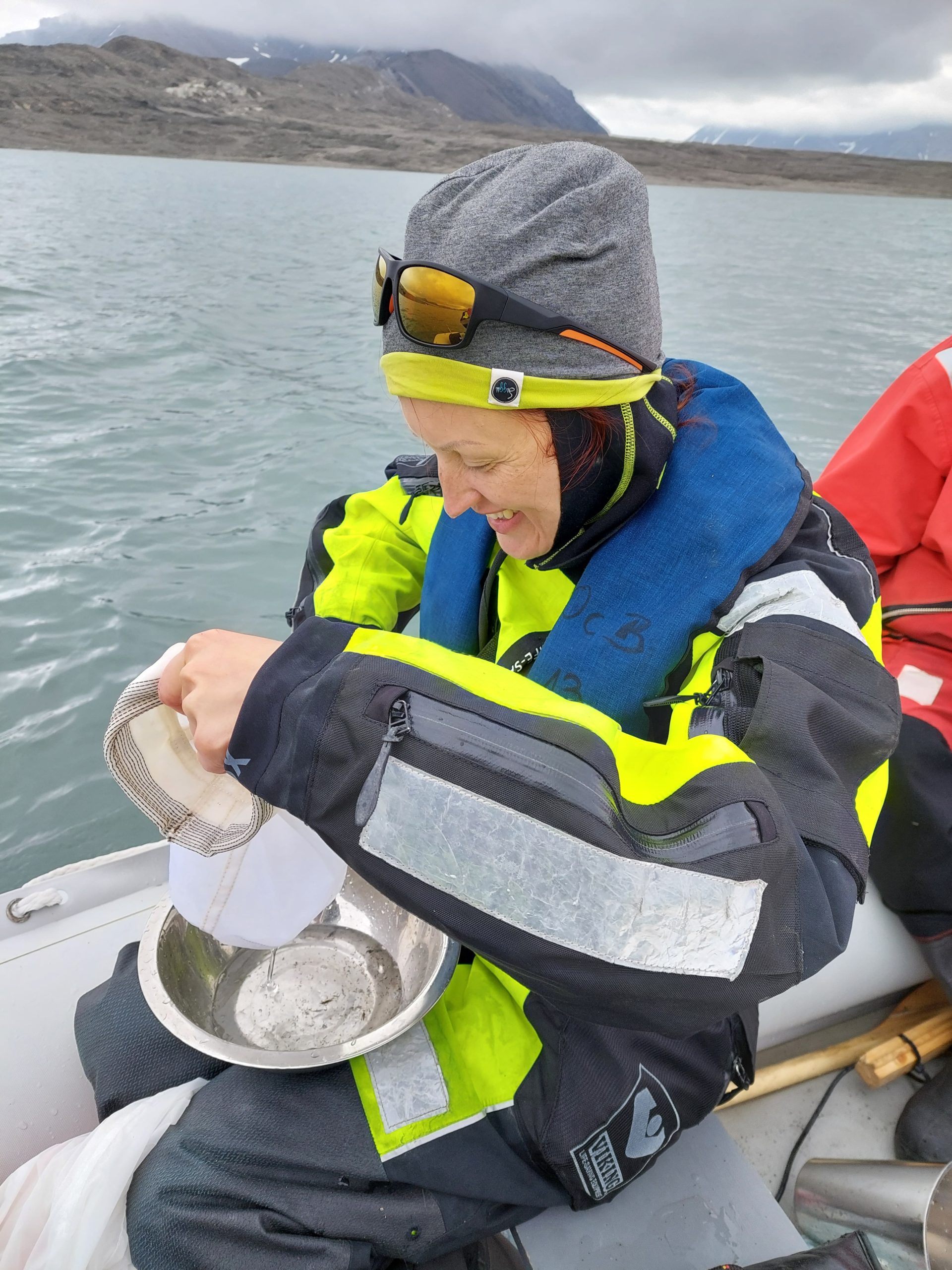
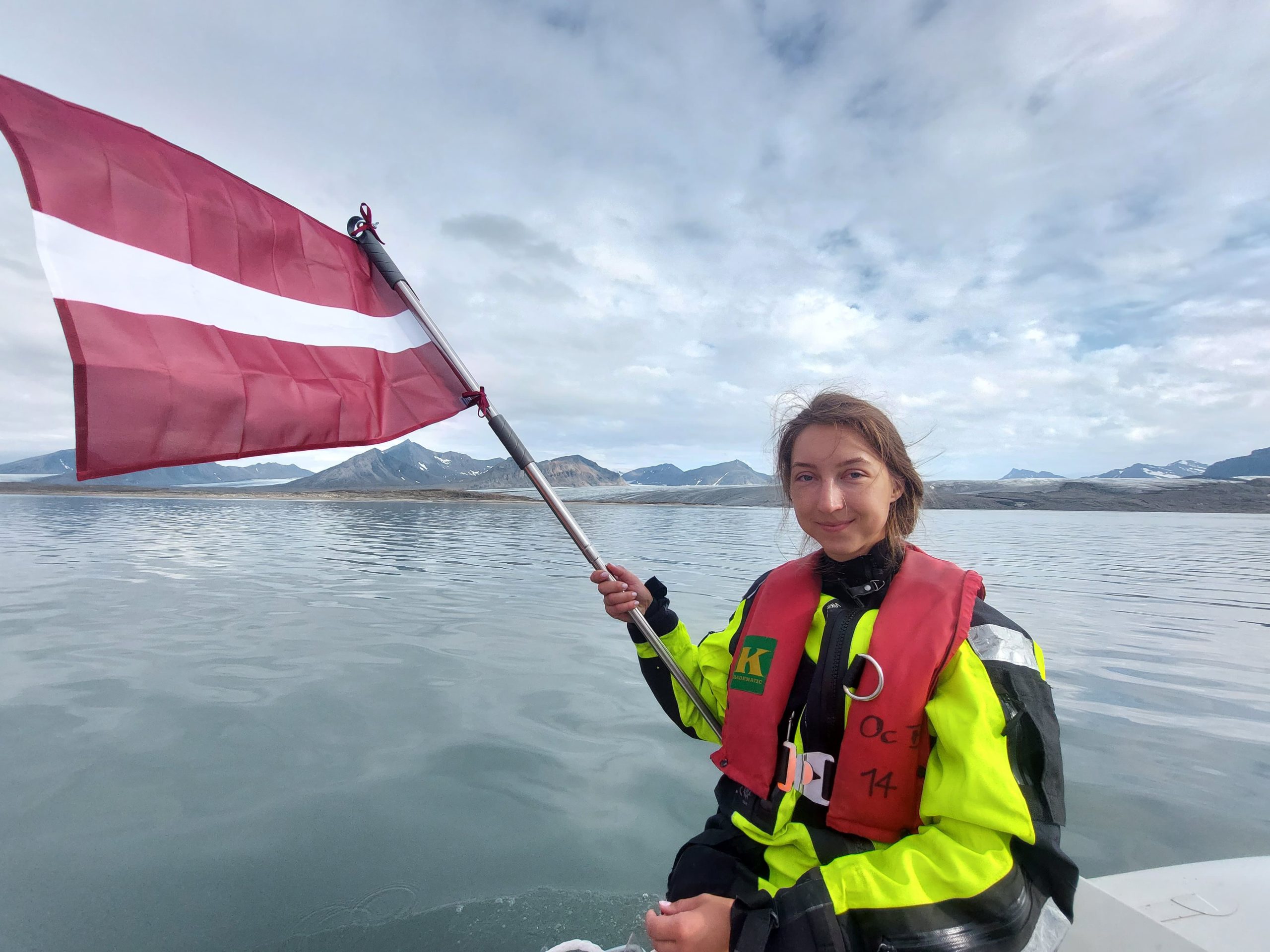
Why should Latvian researchers study something in the Arctic, if we are not there and the end result is not something that a resident of Latvia could eat, put on a shelf or wear on their back? Is it a study for the sake of a study, just for prestige?
The Arctic region faces the most pronounced effects of climate change – it warms much faster than other areas, so studying the Arctic helps to understand future global climate change. “So what?” the average resident of Latvia might say – “let the Arctic melt, what does it have to with me?!” However, we are more connected to the Arctic than we would like to think. Everyone must have noticed the recent extreme heat waves or devastating rains in Europe. Changes in the Arctic play a role in this. Rapid warming of the Arctic affects weather patterns, such as changing existing atmospheric circulation patterns. Shrinking of the ice cover in the polar regions affects the movement of air masses, which in turn changes the weather regionally in other parts of the world. As the Arctic warms, the North Atlantic Ocean current is affected, which directly determines climate in Latvia. The North Atlantic current warms the air masses above the ocean, which increases the air temperature in Latvia during the winter and lowers it in the summer. As the climate changes, these circulation patterns change. Arctic research helps predict changes and better prepare for them.
Other reasons to care about Arctic exploration? It is no secret that one of the consequences of climate change is sea level rise, which is particularly relevant for coastal residents all over the world (as a small reminder, the coastal border of Latvia is almost 500 km). Also, the Arctic is a region of unique biodiversity, ecosystems and natural resources. While studying the Arctic, we see clearly how species adapt to rapid and extreme changes, how some organisms disappear and others take their place. This information is useful in predicting changes in our latitudes. As the glaciers melt, resources such as oil, gas and various minerals become more accessible. About 10% of the world’s oil and 25% of natural gas come from the Arctic regions. A balance between economic benefits and sustainability is essential in the exploitation of resources in order not to deplete them. Another important aspect is international cooperation and politics. Research in the Arctic contributes to the establishment and improvement of international relations, a vital aspect of global environmental protection, sustainability and geopolitics.
Arctic research also covers many other disciplines, especially with regard to modern technologies used in various industries outside the Arctic, such as satellite and remote sensing technologies.
The Arctic affects us humans directly when it comes to spread of diseases. As the climate changes, new pathogens may reach latitudes that were previously unsuitable for them and pose a threat to both humans and animals.
The Arctic is also its indigenous people and their cultural heritage and traditions. For example, while collecting samples, we noticed that there are antenna installations and a couple of buildings a few kilometers away on the shore. At first we thought that it was an autonomous meteorological station, however, upon further investigation, it turned out to be a very special place called Framhamna – a traditional reindeer and seal hunter house, built in 1991 and intended for permanent living and hunting. The local government of Svalbard stipulates that the managers of this property are not allowed to use it any other way than for the maintenance of traditional heritage.
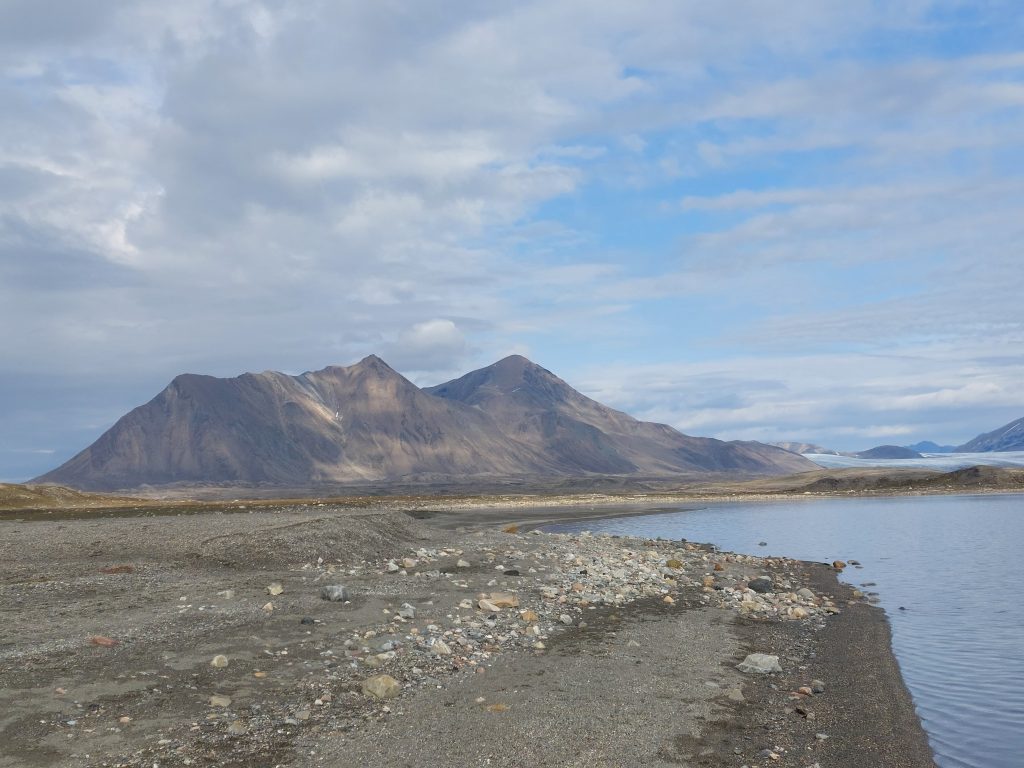
For this year our expedition has come to an end. We have collected many samples, which must now be processed and analyzed to get the first results. We will return to Svalbard next year to repeat sampling for comparison, collect additional sediment borehole samples and highlight the sediment catchers placed in the lagoon this year.
The last evening on the yacht is cozy and we are happy that, despite the changed work plan and approach, the goal of its implementation has been achieved. When the work is done, we can also sing. Andrius has ukulele with him and he entertains us with a self-interpreted song about polar bears (you can hum along to the melody of Wet Wet Wet song “Love is all around you”“):
Desperate bearwatcher’s song
It’s written on the sand, it’s everywhere I go
Bear traces are all around me and so excitement grows
I smell it in the breeze, I feel it to the bone
So, if you see white fur, come on just let me know
Andrius from Klaipeda University
We thank the readers, thanks for sticking around and sharing our posts! Prize winners are announced in the first comment on the last post on Facebook. Blog posts were created by Inta, re-read with a critical eye and mercilessly edited by Marta and adapted for social media needs by Valentīna.
If someone is willing and able to support us, we will be grateful for financial support in polar research, as our research resources as a small country are very limited. An especially important step in the future is to obtain survival suits, which we rented this time, but they should be sewn for a specific person and we made sure more than once that they really are survival suits (for example, falling from a yacht in big waves, sitting for hours in a boat or creeping around rocks looking for clams while waist-deep in icy water).
For support and collaboration please contact Inta (inta.dimante-deimantovica[at]lhei.lv).
Project “MP-ARCTIC” is implemented with the support of the Latvian Science Council.